Hostile Entities in Chained in Backrooms
Recognize tells early — the chain makes every chase a group problem.
Survival mindset while tethered
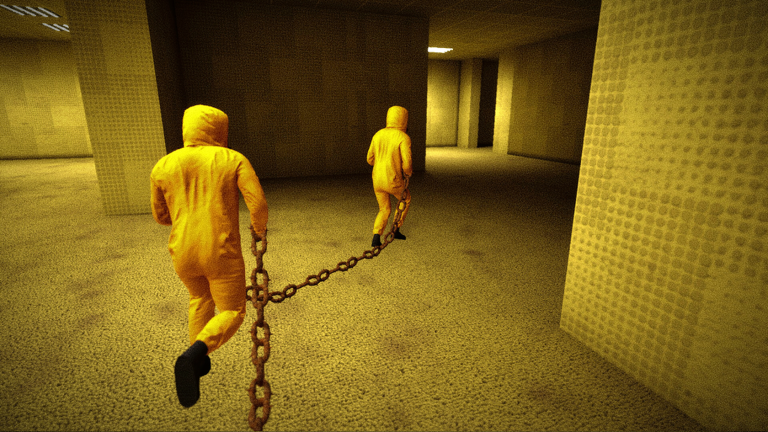
Hostile creatures in Chained in Backrooms are not just jump-scare props. Because 1–8 players share a physical chain, one person’s panic path becomes everyone’s path. This guide focuses on behaviors and response habits rather than spoiling every scripted scare. Pair it with Team Roles so Front peeks, Middle relays, and Back owns rear vision.
The experience is a mission-based obby horror by Musta and Alexander. Expect liminal halls, mission props, and moments where monsters pressure you during puzzles. If you came from solo Backrooms games, unlearn lone-wolf juking.
Universal tells to train your ears and eyes
| Tell | What it often means | Party response |
|---|---|---|
| Growls / heavy footsteps | Nearby patrol or aggro | Stop joking, tighten formation, face the sound |
| Sudden light flicker | Scripted pressure or spawn telegraph | Hold jumps; Front reassesses route |
| Distant chase music / sting | Encounter started | Abort greedy looting; commit to exit plan |
| Teammate silence after noise | Someone froze or died | Middle asks for status once, clearly |
Do not invent five conflicting theories mid-chase. One sentence from Front (“back left, hold”) beats a debate.
Behavior archetypes
Patrol stalkers
These threats loop a route or loiter in corridors. They punish noisy, stretched chains that wrap around corners. Keep the snake short in tight halls. If Front peeks a stalker, Middles should not keep walking — slack disappears and someone clips the hitbox.
Chase predators
When a chase starts, sprint decisions must be unanimous. The Front picks the escape lane; Back announces if the threat is gaining; Middles resist side-quests. Turning around individually creates knots that wipe faster than the monster.
Ambush / scripted encounter entities
Some rooms trigger creatures when levers flip or arcade objectives complete. Before interacting, park the party in a clear stance. Review Items so the person on the lever warns “pulling in three.”
Environmental “fake entity” pressure
Trains, collapsing paths, and hazard volumes can feel monster-like. Treat them with the same call discipline. Difficulty ranking for these rooms sits on the Level Difficulty page.
Role-specific entity duties
Front: Peek angles, call holds, refuse to drag the party into unknown dark without a plan.
Middle: Repeat Front’s threat call to Back; watch mid-chain snags on geometry while people rotate cameras.
Back: Own rear audio. If something opens behind, your early call saves the whole stack. Never AFK during quiet segments — quiet is when ambushes land.
Hiding and cover while chained
Cover only works if the entire chain fits. A locker fantasy from other horror games fails when seven avatars are glued together. Prefer wide alcoves, side rooms with single exits, and pre-agreed freeze spots. If cover is too small, keep moving as a unit instead of stuffing half the party into a corner.
Crouch or slow movement can help when the design rewards stealth, but never assume stealth if teammates are still sprinting. Sync states: all sneak or all run.
Boss-adjacent entities
Boss stages rank S-tier for a reason: attack patterns plus chain limits. Assign:
- One player calling boss telegraphs.
- One player calling chain slack / positioning.
- Everyone else executing — not freelancing.
Injected revive menus from community Scripts may seem tempting after a boss wipe. They risk accounts and teach nothing. Reset, re-role, and attempt again.
Common wipe causes (fix them)
- Split focus — half the party still solving a puzzle while a chase is live.
- Stretch — Front sprints, Back loots, chain becomes a tripwire.
- Silent Back — rear threat never announced.
- Meme mic — jokes during Simon-adjacent pressure rooms.
- No pre-pull plan — lever yanked without stance.
Training plan
- Warm up on Maze / Obby so chain etiquette is automatic (difficulty list).
- Run a deliberate “quiet hallway” drill: thirty seconds of no memes, only callouts.
- Practice a fake chase: Front says “chase left,” everyone commits without debating.
- Review item interactions so objectives finish faster under pressure (Items).
- Complete the Team Ready Checklist before public S-tier attempts.
- After patches, skim Launch Notes for new threat rooms.
After a scary wipe
Take thirty seconds in the lobby. Name the tell you missed. Swap Front if tilt is high. Claim or confirm Free Rewards so nobody alt-tabs to the group page mid-run. Recheck Codes only if a patch notes promo — otherwise stay focused.
Official place link and wiki map: Wiki Links. Beginner loop: Getting Started. Parent hub: Entities & Items.
Mastering entities is mostly mastering shared attention. The monsters are the exam; the chain is the pencil you all hold together.
Frequently Asked Questions
Quick answers to the most common questions.
How do I know an entity is nearby?
Listen for growls, footsteps, stingers, and watch for light flickers or sudden ambience changes. Call the tell immediately.
Can one player juke while others stand still?
Rarely. The chain links your movement — plan escapes as a unit or you will knot and wipe.
Who should watch for monsters?
Everyone, but Back specializes in rear vision while Front peeks the route. Middle relays calls.
Do scripts help against entities?
They can violate Roblox rules and risk bans. Learn behaviors and roles instead of relying on injectors.